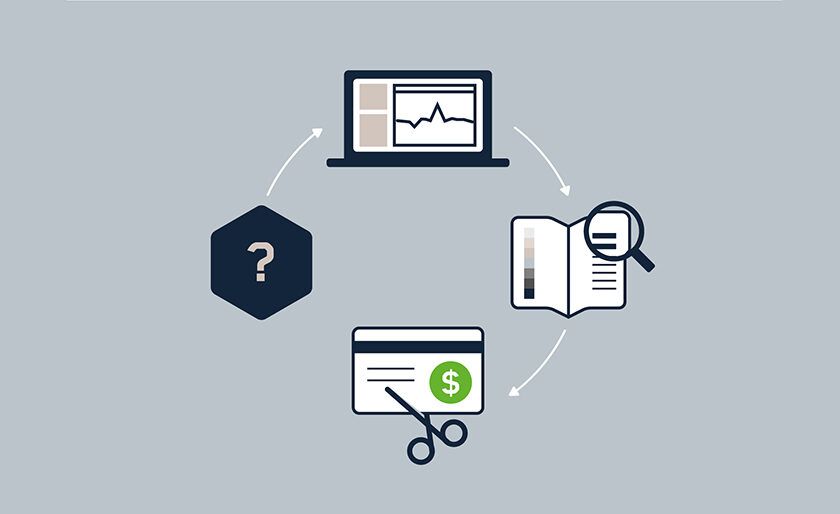
Smart gas monitoring investment: reducing the cost of uncertainty
In safety-critical industrial environments, the cost of gas monitoring is not only the price of the instrument. It is also the cost of uncertainty: unnecessary shutdowns, delayed leak location, incomplete incident data, and decisions made without knowing exactly what is in the air.
This article continues from our earlier comparison of gas analyzers and gas detectors. Here, we go further to: what can happen when safety, operations, and compliance teams do not have analyzer-level insight when they need it most?
When uncertainty turns into cost
When a possible gas leak is detected, the cost is not limited to the leak itself. The higher cost may come from the decisions that need to be made before the situation is fully understood.
If the gas type, concentration, or risk level is unclear, production may need to be stopped as a precaution. In many industrial environments, even a short shutdown can be extremely expensive.
The business case is simple: the faster teams can replace uncertainty with reliable information, the faster they can make the right decision.
If analyzer-level insight helps prevent even one unnecessary production stop, the investment can already pay for itself.
Faster leak location means less downtime
Once the business risk is clear, the practical question becomes: how quickly can the team find the source and understand the situation on site? A basic alarm can tell a team that something may be wrong, but it does not always provide enough information to decide the next action.
With multi-gas FTIR analysis, teams can move from a general alert to a more specific answer.
They can identify which gases are present, check concentrations, and use the measurement data to narrow down the source of the leak. This supports faster maintenance decisions and helps teams avoid shutting down more of the process than necessary.
For industrial hygiene, occupational safety, and incident response teams, this also improves the quality of the response. The decision is based on measured data, not only on a warning signal.
Detecting risks before exposure limits are reached
Risk management is not only about reacting when a limit has already been exceeded. In many industrial environments, the more valuable capability is early awareness. If a potential leak can be detected before concentrations reach a critical level, the safety team has more time to assess the situation and choose the right response.
For many common industrial chemicals and toxic gases, a multi-gas FTIR analyzer can detect concentrations below relevant occupational exposure limits.
This makes it possible to notice a developing issue earlier and reduce the risk of employees being exposed to harmful levels. This is especially important when the exact gas risk is not fully known in advance.
Instead of monitoring only a narrow set of predefined gases, safety teams can collect broader measurement data and make decisions with a clearer understanding of what is actually present.
Data reduces compliance and investigation risk
Measured data also has value after the situation is over. When results are saved, they can support reporting, internal investigations, compliance documentation, and future safety planning.
This can be important when an organization needs to show what was measured, when it was measured, and how decisions were made. In safety-critical environments, documentation is part of risk management. It helps teams learn from incidents, improve procedures, and demonstrate due diligence.
With analyzer-level data, teams are not limited to a simple yes-or-no alarm history.
They have quantitative information that can be reviewed, compared, and used to support better decisions over time.
Total cost of ownership: when cheaper tools cost more
Purchase price is only one part of the total cost of gas monitoring. The real cost also includes time spent on measurements, consumables, repeated manual work, false positives, delays, reporting, and the cost of decisions made with limited information.
In high-throughput environments, these costs add up quickly. In shipping container monitoring, for instance, FTIR analyzer such as the GT5000 Terra can reduce annual monitoring costs by up to 65% compared with handheld detectors and tubes, especially as the number of measurements increases. Monitoring 50 containers per week costs approximately €64,725 per year with FTIR, compared with €163,725 per year with handheld detectors and tubes.
The same logic applies beyond container monitoring. Faster measurements, fewer false positives, and the ability to re-analyze saved data can reduce the cost of daily work in any monitoring task that is frequent, complex, or linked to costly operational decisions. In these cases, the cheapest tool at purchase may not be the lowest-cost option in practice.
Without analyzer-level insight, the risks fall into five areas
- Operational risk: slower leak location, longer downtime, and broader shutdowns than necessary.
- Safety risk: late detection of low-level hazards or unknown gases.
- Compliance risk: limited measurement data for reporting, investigations, and exposure assessment.
- Financial risk: avoidable shutdowns, repeated manual work, consumables, and false positives.
- Future risk: a monitoring setup that cannot easily adapt when gases, processes, or applications change.
Choose based on risk, not purchase price
The right gas monitoring investment is not always the one with the lowest purchase price. It is the one that reduces the cost of uncertainty: fewer unnecessary shutdowns, faster leak response, stronger documentation, and better control of safety risks.
For simple detection of a known gas, a detector may be enough. But when safety decisions affect production continuity, compliance, and worker protection, a multi-gas FTIR analyzer gives teams the information they need to act earlier and with more confidence.
Choose the tool that reduces your risk, not just your invoiceIn complex environments, choosing an FTIR multi-gas analyzer such as GT5000 Terra can mean the difference between a simple alert and a clear understanding of the situation. |
 |